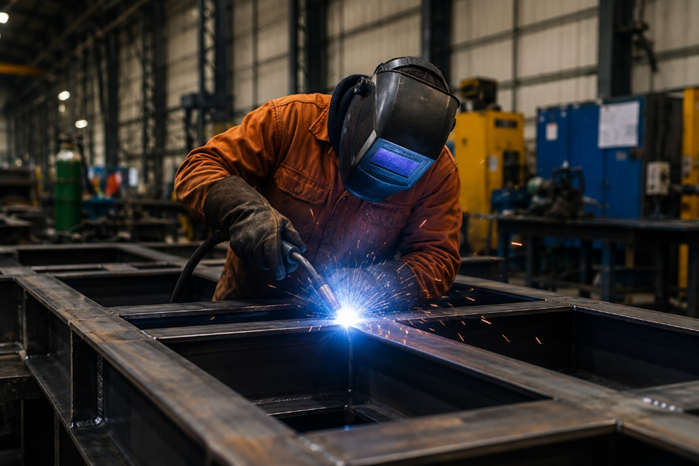
Choosing a pressure vessel manufacturer involves more than comparing price and lead time.
The vessel needs to be suitable for its intended duty, operating conditions, materials, applicable standards and inspection requirements. It also needs to work effectively within the wider system into which it will be installed.
At ENCO, we know that considering these requirements early can reduce technical uncertainty and help identify potential design, fabrication or installation issues before manufacturing begins.
Whether you require a bespoke pressure vessel, storage tank or other containment equipment, these are some of the key areas we recommend considering when choosing a manufacturing partner.
Does the Manufacturer Understand the Applicable Standards?
Pressure vessel requirements depend on the equipment, its intended use and the conditions under which it will operate.
In Great Britain, the Pressure Equipment (Safety) Regulations 2016 apply to pressure equipment and assemblies within their scope with a maximum allowable pressure greater than 0.5 bar.
The Pressure Systems Safety Regulations 2000 (PSSR) are separate. Where PSSR applies, the user of an installed system or owner of a mobile system has duties relating to safe operation and examination, including ensuring a suitable written scheme of examination is in place for relevant equipment.
Depending on the project, recognised pressure vessel codes and standards may include:
- PD 5500
- BS EN 13445
- ASME BPVC Section VIII
At ENCO, our in-house design team works with these recognised codes and standards according to individual project requirements. You can find out more about our pressure vessel manufacturing capabilities.
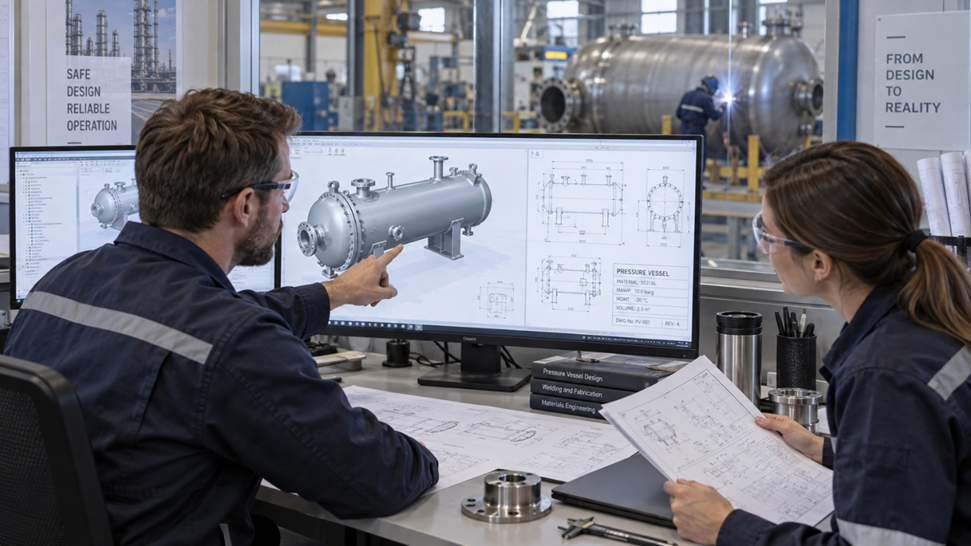
Can They Support Pressure Vessel Design?
A pressure vessel should be designed around the conditions in which it will operate rather than treated as a standard fabricated component.
Factors including design and operating pressure, temperature, process medium, capacity, materials, connections and installation requirements can all influence the finished design.
Our in-house design service includes mechanical design, CAD drafting, P&IDs, process layouts, surveys, 3D scanning and detailed manufacturing drawings.
By bringing pressure vessel design and fabrication together, we can consider buildability, welding, inspection and installation requirements before fabrication begins.
What Pressure Vessel Fabrication and Welding Capabilities Do They Have?
Pressure vessel fabrication requires controlled manufacturing processes and appropriate welding capability.
Before appointing a manufacturer, we recommend establishing how the work will be controlled and which activities are carried out in-house.
Key areas to consider include:
- welding procedures and qualified welders
- material identification and control
- inspection requirements
- fabrication records
- project documentation
- experience with comparable industrial pressure vessels
At ENCO, we operate our own fabrication facilities in Elland, West Yorkshire, providing fabrication and coded welding services across carbon steel, stainless steel and bespoke fabricated equipment.
For pressure vessel projects, this allows us to coordinate design, fabrication, coded welding, inspection and testing as part of the same engineering process.

Can the Manufacturer Work with the Required Materials?
Material selection should reflect the vessel’s process conditions and design requirements.
Pressure, temperature, process medium, corrosion conditions and cleaning requirements can all influence the specification.
Stainless steel pressure vessels may be appropriate where corrosion resistance, hygiene or process compatibility is important, while carbon steel may suit other industrial applications.
We manufacture around the requirements of the individual project rather than applying the same material specification to every vessel.
How Will the Vessel Be Inspected, Tested and Documented?
Inspection and testing should be considered before manufacturing starts rather than treated as a final-stage exercise.
The exact requirements will depend on the vessel, design basis, applicable legislation, conformity assessment requirements and project specification.
We recommend confirming:
- inspections required during fabrication
- testing required on the completed vessel
- whether third-party involvement is required
- which records and certification will be supplied
Technical documentation may also be needed to support client approval, conformity assessment, third-party inspection, installation or future examination.
We at ENCO find that inspection, testing, fabrication drawings and technical documentation are considered as part of the overall pressure vessel manufacturing process.
Can the Manufacturer Support the Wider Installation?
Pressure vessels rarely operate in isolation.
They may connect to process pipework, pumps, supports, access platforms and other mechanical equipment. Lifting arrangements, site access and maintenance requirements can also influence the final design.
We combine pressure vessel manufacture with in-house design, fabrication and mechanical installation services.
This allows us to consider how the vessel interfaces with surrounding plant and pipework rather than treating it as a standalone fabricated item.

Choosing the Right Pressure Vessel Manufacturing Partner
A suitable pressure vessel manufacturer should understand the complete engineering requirement, not simply manufacture a vessel to a drawing.
At ENCO, we bring design capability, pressure vessel fabrication, coded welding, inspection, testing, documentation and wider mechanical installation together within one engineering team.
You can view examples of our broader engineering experience on our Projects page.
If you have a pressure vessel requirement, contact us with details of the application, operating conditions and any drawings or specifications you already have. We can then discuss the design, fabrication and installation requirements relevant to your project.
FAQs About Pressure Vessel Manufacturing
1. What should I look for in a pressure vessel manufacturer?
Look for relevant design capability, controlled fabrication processes, qualified welding capability, defined inspection and testing requirements, technical documentation and experience relevant to your industrial project.
2. Which standards are used for pressure vessel design?
Depending on the project, recognised pressure vessel codes and standards may include PD 5500, BS EN 13445 and ASME BPVC Section VIII.
3. Can ENCO design as well as manufacture pressure vessels?
Yes. We provide in-house engineering design alongside fabrication, allowing our teams to consider design, manufacturing and installation requirements together.
4. Does a pressure vessel need third-party inspection?
Not every vessel has the same requirements. Third-party involvement can depend on applicable legislation, conformity assessment, design requirements and the project specification.
5. What materials can ENCO fabricate pressure vessels from?
We fabricate in materials including carbon steel and stainless steel, with the appropriate material selected according to the project requirements.
6. What information is useful when requesting a pressure vessel quote?
Useful information includes the application, process medium, capacity, design and operating conditions, materials, connections, inspection requirements and any existing drawings or specifications.