Industrial projects rarely involve completely standard conditions. Existing equipment, restricted access, available space, installation sequencing and operational requirements can all influence how fabricated components need to be designed and manufactured.
This is why bespoke metal fabrication is so important in industrial environments. Instead of adapting a standard component after production, the fabrication process can be developed around the specific application and site requirements from the outset.
For businesses looking for metal fabrication services in the UK, a project-specific approach can improve buildability, reduce unnecessary work on site and support better integration with the wider installation.
What Is Bespoke Metal Fabrication?
Bespoke metal fabrication is the manufacture of metal components, assemblies and structures around the requirements of a particular project rather than relying on standard, off-the-shelf products.
Dimensions, materials, connection points, access restrictions, lifting requirements and installation conditions can all influence the finished component.
On an industrial site, fabricated items may need to fit around existing machinery, connect with pipework, pass through restricted access routes or allow suitable space for inspection and maintenance.
For us, the job is not simply to manufacture a component that matches a drawing. It also needs to be practical to transport, position and install in the intended environment.
Why Do Industrial Projects Require a Bespoke Approach?
Existing industrial sites can present practical constraints that standard fabricated products may not address.
A support may need to fit between existing equipment. A skid may need to pass through a limited access route. A gantry or platform may need to avoid existing pipework while still providing suitable access to plant and machinery.
These requirements can influence the size, shape and configuration of fabricated metalwork before production begins.
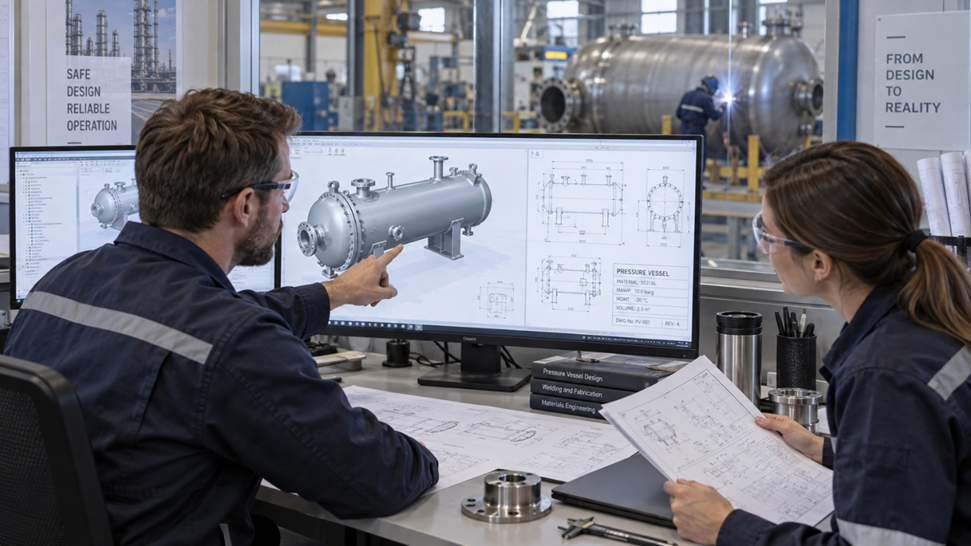
At ENCO, we use site information, drawings, dimensions and survey data to identify these constraints as early as possible. Where required, our in-house design capability includes CAD, laser scanning, 3D modelling, mechanical design and pipework design.
This allows us to consider fabrication as part of the wider engineering and installation process rather than as an isolated workshop activity.
Why Should Design and Fabrication Work Together?
A technically correct design still needs to be practical to manufacture and install.
Material selection, connection points, assembly methods and lifting arrangements can all influence how successfully a fabricated item moves from design to production and then onto site.
By bringing design and fabrication together, potential issues can be identified before manufacturing begins.
This is especially valuable on retrofit and modification projects, where new components must integrate with existing plant and infrastructure.
Early coordination can reduce avoidable alterations on site and support a smoother installation process.
What Types of Industrial Metal Fabrication Can ENCO Support?
ENCO provides bespoke fabrication for a range of industrial and mechanical applications, including:
- Skids
- Hoppers
- Small tanks
- Steam headers
- Gantries
- Lifting platforms
- Barriers and gates
- Handrailing
- Flooring
- Structural supports
- Kicker plates
- Bespoke steelwork
Our industrial metal fabrication capability is focused on fabricated steelwork and assemblies that form part of wider mechanical and engineering projects.
This means we can consider the fabricated component alongside pipework, equipment, access requirements and the overall installation programme.
How Does Sheet Metal Fabrication Differ from Structural Steel Fabrication?
Sheet metal fabrication generally involves forming or welding components from flat metal sheet.
Structural steel fabrication typically relates to heavier components and assemblies used for supports, platforms, frameworks, skids and access structures.
The right approach depends on the component, material, operating environment and intended application.
At ENCO, our core fabrication capability is focused on bespoke industrial steelwork and fabricated assemblies for mechanical and industrial projects.
Should Metal Fabrication Be Completed in a Workshop or on Site?
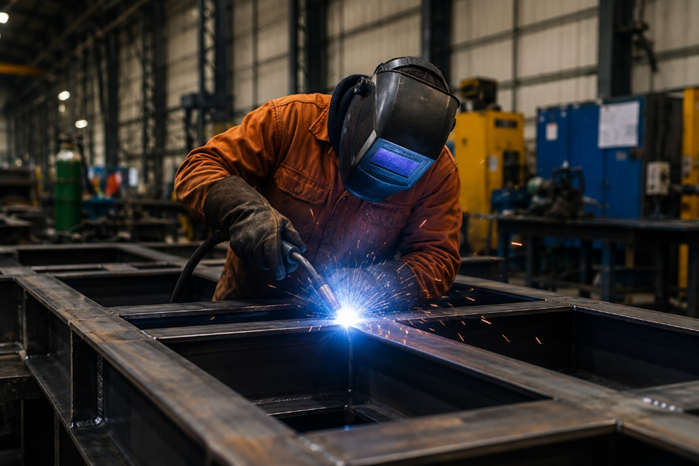
Where practical, completing fabrication within a dedicated workshop reduces the amount of work required on an operational site.
Components and assemblies can be prepared before delivery, supporting a more controlled installation process.
Some projects will still require fabrication or welding on site because of access restrictions, final positioning requirements or connections with existing infrastructure.
We can support both workshop and site fabrication, allowing the approach to be planned around component size, transport, access and installation requirements.
Bespoke Fabrication in Practice
The value of combining design, fabrication and installation becomes clear on complex operational sites.
On our project for Encirc Glass in Chester, our team was responsible for the steelwork design and in-house fabrication before managing lifting, positioning and installation activities on site.
The work required a phased approach so new and replacement equipment could be installed around the operational requirements of the facility.
This meant fabrication had to be considered alongside access, lifting, sequencing and interfaces with existing equipment.
For us, this demonstrates why industrial fabrication should be planned as part of the complete installation rather than treated as a standalone manufacturing exercise.

What Should You Look for in a Fabrication and Welding Company?
Choosing a fabrication and welding company involves more than comparing workshop processes.
For complex industrial projects, it is valuable to work with a supplier that understands how design, fabrication and installation affect one another.
Important factors to consider include:
- In-house design capability
- Experience with bespoke industrial fabrication
- Understanding of site access and installation constraints
- Workshop fabrication facilities
- Site welding and installation support
- Consideration of buildability
- Clear communication between project teams
A joined-up approach can provide greater continuity from design through to installation and help address practical issues earlier in the project.
Choosing Metal Fabrication Services for Your Industrial Project
The right fabrication solution depends on what the component needs to achieve, where it will be installed and how it connects with the wider project.
At ENCO, our bespoke fabrication capability is supported by in-house design, project management and UK-wide installation teams.
This allows us to consider the practical requirements of fabrication, transport and installation from the outset.
Planning an industrial fabrication project, retrofit or plant modification?
Discuss your fabrication requirements with ENCO and talk to our team about your drawings, site constraints, installation requirements or project specifications.

Frequently Asked Questions About Bespoke Metal Fabrication
1. What is bespoke metal fabrication?
Bespoke metal fabrication involves manufacturing metal components, structures or assemblies around the requirements of a specific project, including dimensions, materials, connections, access and installation conditions.
2. Why is bespoke metal fabrication important for industrial projects?
Industrial sites often have existing equipment, pipework, restricted access and specific operational requirements. Bespoke fabrication allows components to be developed around those conditions rather than relying on a standard product that may need modifying later.
3. What is the difference between sheet metal fabrication and structural steel fabrication?
Sheet metal fabrication generally involves forming or welding components from flat metal sheet. Structural steel fabrication typically involves heavier components used for supports, frameworks, platforms and access structures.
4. Can metal fabrication be completed off site?
Yes. Where practical, components can be fabricated in a workshop before being transported to site. Some projects may still require site welding or fabrication because of access, positioning or installation requirements.
5. How can bespoke fabrication help with restricted site access?
Access constraints can be considered during the design and planning stages. Component dimensions, lifting arrangements, assembly methods and installation sequencing can then be developed around the available routes and working space.
6. What should I look for in a fabrication and welding company?
Look for a supplier with suitable workshop capability, design support, site experience and an understanding of installation constraints. For complex industrial projects, the ability to coordinate design, fabrication and installation is particularly valuable.