UK manufacturers need experienced industrial pipework contractors who understand that pipework is directly linked to safety, uptime, product quality and long-term operational performance. Whether you are upgrading a plant room, installing new process lines, replacing ageing industrial piping systems or modifying an existing production area, the right contractor can help keep site activity controlled and production moving.
At ENCO, we work with industrial and manufacturing clients on process pipework installation, mechanical pipework installation, pipework fabrication and installation, in-house design, site surveys and wider turnkey engineering delivery.
Our role is simple: your mechanical engineering partner: design, fabricate, install.
Why process pipework matters in manufacturing
Process pipework plays a critical role in the day-to-day operation of industrial sites. Depending on the facility, systems may carry chilled water, LTHW, steam, condensate, compressed air, oils and fuels, chemical processes, food and hygienic services, water treatment or other mechanical services.
For procurement, operations, maintenance and engineering teams, the priorities are usually clear:
- Reliable delivery with minimal downtime
- Safe working practices in live or busy areas
- Practical routing for maintenance and future access
- Clear commercial and technical communication
- Fabrication quality suited to site conditions
- Testing, commissioning input and useful handover information
A strong pipework system should not only meet the technical requirements. It should also be buildable, maintainable and practical for the people who operate the facility every day.
That is why choosing the right industrial pipework contractors matters. A good partner will consider the full project, not just the site work.

A joined-up route from survey to site delivery
At ENCO, we can guide projects from early consultation through to design input, prefabrication, site works, testing and commissioning support. This joined-up approach helps reduce the handoff issues that can occur when different suppliers are responsible for separate stages.
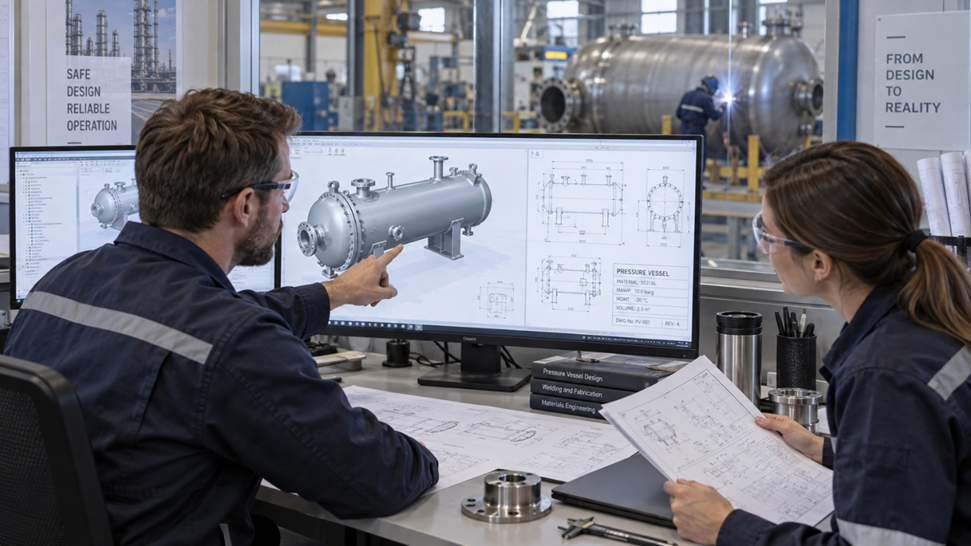
Our in-house design service supports accurate planning through CAD, 3D modelling, laser scanning, technical surveys and fabrication input. This can be valuable where space is limited, existing services need to be considered, and installation windows are tight.
Where appropriate, prefabricated pipework can reduce time spent in production areas. Producing sections in a controlled workshop environment can also support quality, improve efficiency and make site activity easier to manage.
For live operational sites, better planning can improve sequencing, limit disruption and give project teams more control before work begins.
Choosing the right pipework materials
Material selection has a major impact on performance, maintenance and long-term suitability. The correct specification will depend on the process, operating environment and performance requirements of the system.
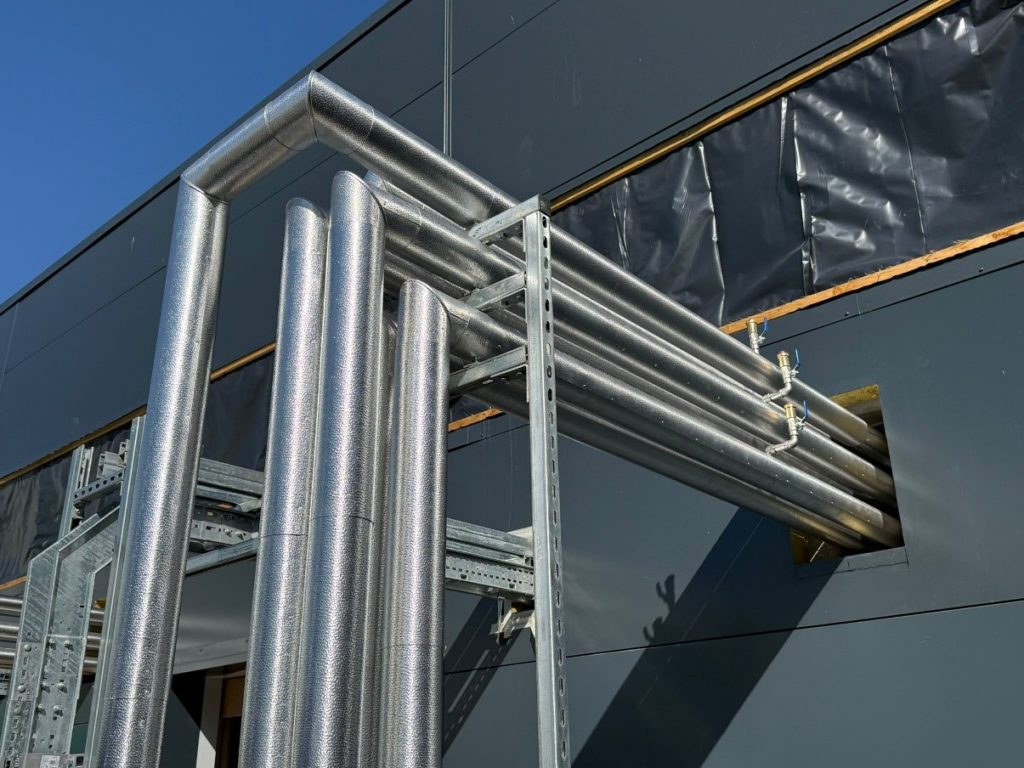
Stainless steel pipework may be appropriate where hygiene, cleanability, corrosion resistance or visual finish are important. Carbon steel may be suitable for other industrial applications, depending on pressure, temperature, process media and site conditions.
The correct specification will depend on factors such as:
- Process media
- Temperature and pressure
- Pipe diameter and flow requirements
- Hygiene or cleaning requirements
- Site environment
- Maintenance access
- Testing requirements
- Future expansion plans
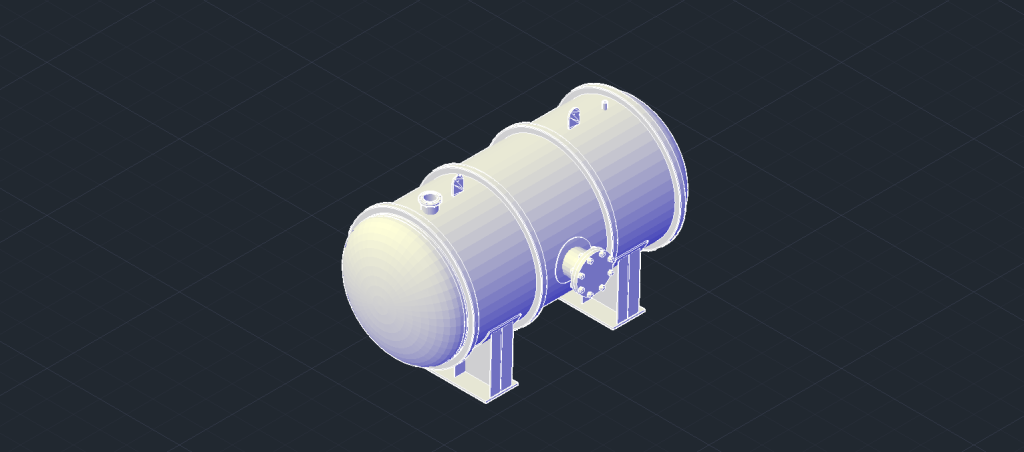
Where pressure equipment or specialist containment is involved, design and fabrication should be code-led and assessed against the relevant standard for the application, such as PD 5500, EN 13445 or ASME VIII where applicable.
A practical contractor will not simply follow a drawing without question. They should understand how the system will be used, how it will be maintained and whether the proposed design suits the working environment.
Pipework fabrication and installation
High-quality pipework fabrication and installation depend on both technical accuracy and practical site experience. Fabrication needs to account for drawings, measurements, tolerances, access restrictions, sequencing and final operating conditions.
Where suitable, prefabrication can help improve project control. Pipework sections can be prepared off-site, reducing the time required on-site. This can be especially useful when shutdown windows are limited, or works must be coordinated around live operations.
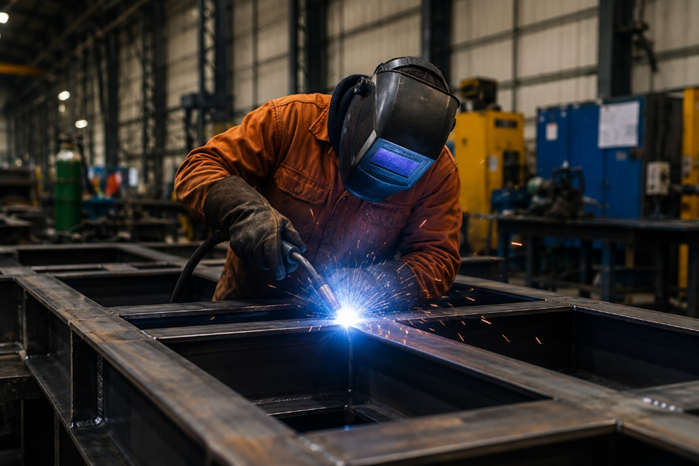
The site phase then needs to be planned around safety, access, lifting, permits, hot works, testing and other contractors. In process environments, coordination is often just as important as the pipework itself.
At ENCO, our mechanical, fabrication, electrical and project support capabilities allow us to take a connected view of the package. This is particularly valuable where pipework interfaces with controls, pumps, tanks, vessels, platforms, plant rooms or wider process equipment.
What affects the cost of process pipework installation?
Every site is different, so project costs depend on the scope, design and working environment. Rather than looking only at metre rates or labour, buyers should consider the full project picture.
Common cost factors include:
- Pipework material, diameter and wall thickness
- Complexity of routing and access
- Site surveys, scanning and design input
- Prefabrication requirements
- Shutdown windows or out-of-hours working
- Lifting, access equipment and logistics
- Testing, inspection and commissioning requirements
- Insulation, supports and secondary steelwork
- Documentation and handover requirements
A clear brief at the start can help reduce uncertainty and support a more accurate budget estimate. At an early stage, it is often useful to speak to an engineer, review drawings where available and arrange a site survey before finalising the scope.
A low tender price can be attractive, but buyers should also consider planning quality, clear responsibilities, material suitability and coordination, as these can all affect the final project outcome.
Common challenges on manufacturing sites
Production environments can be complex places to work. Live services, limited access, hygiene zones, existing structures, planned shutdowns and safety requirements all need careful management.
Typical challenges include:
- Routing new pipework around existing services
- Working within planned shutdown periods
- Maintaining safe access for site teams and operators
- Managing hot works and permits
- Coordinating with electrical, controls and process teams
- Avoiding clashes with future maintenance access
- Completing testing and commissioning efficiently
This is where early contractor involvement can add real value. When practical delivery knowledge is brought into the planning stage, it becomes easier to identify buildability issues, improve sequencing and plan prefabrication before teams arrive on site.
Experienced industrial pipework contractors should be able to review practical risks as well as technical requirements. That includes understanding how people, materials, equipment and production activity will interact during the works.
How to choose industrial pipework contractors
Choosing the right supplier is not just about availability. The right partner should understand technical risk, programme pressure, site coordination and the commercial needs of your team.
A useful supplier checklist includes:
- Can they support both design and site delivery?
- Do they have in-house fabrication capability?
- Can they work safely in live production areas?
- Do they understand mechanical and electrical interfaces?
- Can they prefabricate pipework to limit disruption?
- Will they provide clear communication throughout the project?
- Can they support testing, commissioning and handover documentation?
- Do they understand the needs of procurement, operations and engineering teams?
We combine mechanical installations, electrical installations, general fabrication, in-house design, project support and commissioning support. This makes us a practical choice for manufacturers looking for coordinated engineering delivery rather than a fragmented supply chain.
For clients, this can mean fewer handoffs, clearer communication and better control from early planning through to handover.
Mistakes to avoid on process pipework projects
Many pipework issues can be prevented with better planning. Common mistakes include:
- Leaving design input too late
- Not allowing enough time for surveys
- Ignoring maintenance access
- Underestimating shutdown constraints
- Failing to coordinate with electrical or process interfaces
- Choosing materials without considering the operating environment
- Leaving testing and handover requirements unclear
- Using site fabrication where prefabrication would be more efficient
The aim should be to reduce uncertainty before work begins. A disciplined approach to survey, design, fabrication, programme planning and safety helps protect the project from avoidable delays and rework.
Good process pipework installation is not only about what is installed. It is also about how the work is planned, communicated, delivered and handed over.
Speak to ENCO about your process pipework project
Need help with a new pipework package, modification or upgrade?
At ENCO, we provide in-house design and fabrication, mechanical installation, electrical installation and project support for manufacturing and industrial environments. We work with clients who need a practical, safety-led and commercially aware engineering partner for complex mechanical and electrical projects.
Whether you need stainless steel pipework, carbon steel systems, prefabricated pipework, mechanical pipework installation or a wider turnkey engineering project, our team can help you plan and deliver the work effectively.
Request a quote for your process pipework installation or book a site survey or speak to an engineer about your project requirements.
FAQs
What is process pipework installation?
Process pipework installation is the installation of pipework systems that support industrial processes, including steam, chilled water, compressed air, oils, fuels, food processing, water treatment or chemical systems.
What do industrial pipework contractors do?
Industrial pipework contractors help design, fabricate, install, test and support pipework systems used in manufacturing, process and industrial environments.
Does ENCO provide pipework fabrication and installation?
Yes. We provide fabrication support, prefabricated pipework and site-based mechanical installation for manufacturing and industrial environments.
Can ENCO support projects from design through to commissioning?
Yes. At ENCO, we can support projects from design input through to fabrication, installation, testing and commissioning support.
What affects the cost of process pipework installation?
Cost factors include material, pipe size, routing complexity, access, shutdown windows, prefabrication, testing, inspection, insulation and handover requirements.
Do you install stainless steel pipework?
Yes. We work with stainless steel and carbon steel fabrication for mechanical and industrial environments. Material choice depends on the process, operating conditions and project requirements.
What are the benefits of prefabricated pipework?
Prefabrication can reduce time on site, support quality control, make site activity easier to manage and help minimise disruption in live manufacturing environments.
Why choose a turnkey engineering partner?
A turnkey engineering partner can coordinate design, fabrication, installation and commissioning support, helping reduce handoff issues and improve project control.
Can ENCO work on live manufacturing sites?
Yes. ENCO supports mechanical installations across industrial environments where safety, sequencing, access and operational disruption need careful planning.
How do I request a quote?
You can contact us through the website contact form to request a quote, book a site survey or speak to an engineer about your project.